Start with the Sales Pack, Not the Machine
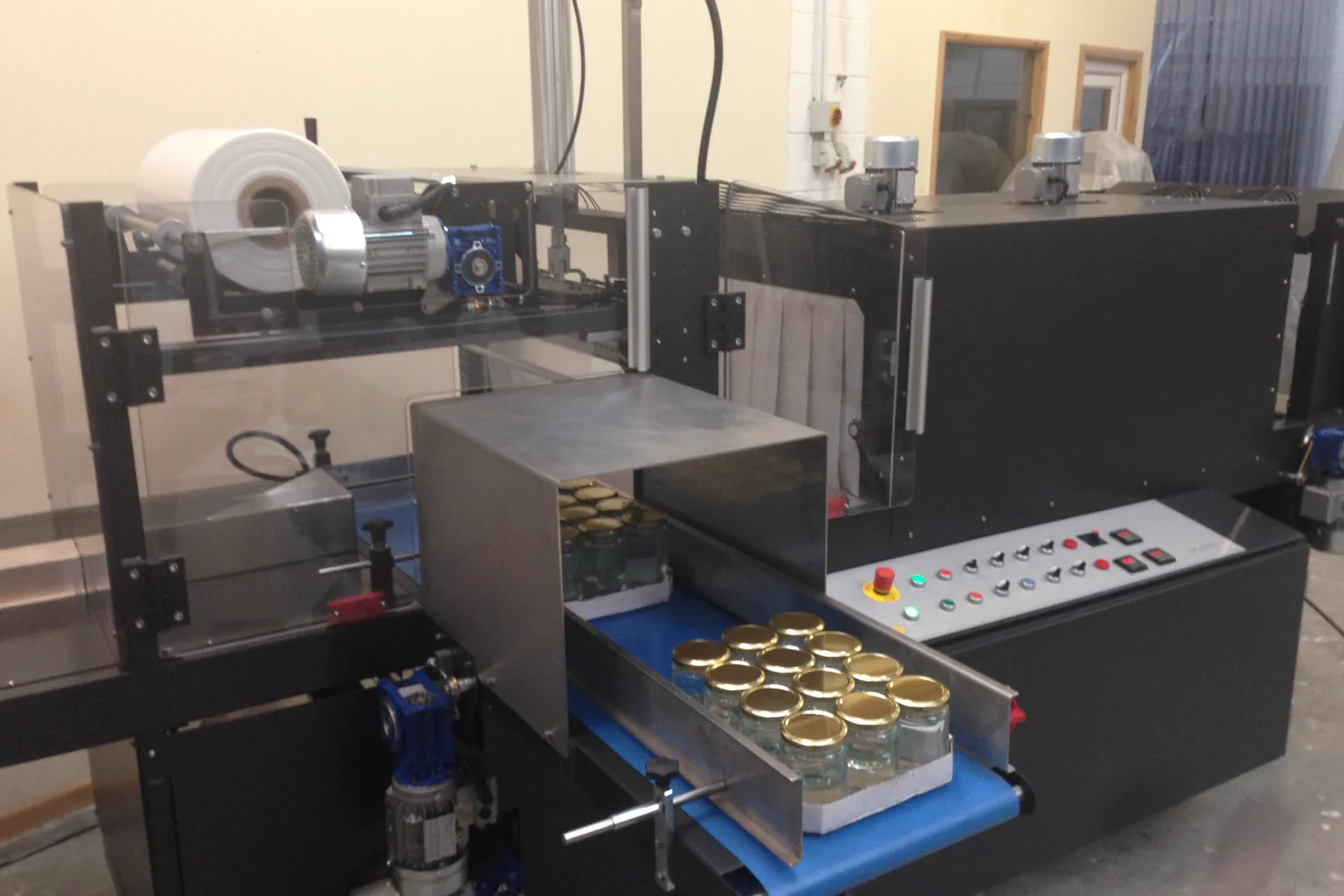
The best way to choose a shrink wrapping machine is to define the finished multipack first. State the container type, pack count, row pattern, orientation and whether the package uses film only, a pad, a tray or another support. A machine intended for six small bottles faces different handling demands from one wrapping heavy glass jars or tall containers.
Prepare a format matrix covering every container and pack configuration expected during the project. Mark the lightest, heaviest, fastest and least stable combinations. Include physical dimensions and samples of bottles, cans or jars as well as trays, pads and film. Nominal drawings alone may not reveal friction, rigidity or surface variation.
Define the commercial quality expected from the pack. The film should contain the group through conveying, storage and normal distribution without unacceptable holes, loose areas or distortion. Appearance criteria should be measurable enough for factory and site acceptance, rather than described only as a tight or attractive pack.
Choose the Required Pack Style
Film-only packs can reduce secondary material, but the containers must support one another and remain stable after shrinking. A flat pad can improve base support and printing area, while a tray can protect the lower container and make handling easier. The right choice depends on product weight, container strength, distribution method and retail requirements.
Specify whether the machine must run one lane or several lanes and whether pack patterns change by recipe. Some products require a divider, handle opening or printed-film registration. Each feature changes material handling and the amount of control needed before sealing.
Do not assume every future pattern can be added through software. Lane guides, grouping devices, film width, seal bar length and tunnel opening may create physical limits. Ask the supplier to state the approved format envelope and what hardware is required for each changeover.
Evaluate Container Stability and Grouping
Before wrapping, containers must be counted and grouped without falling, scuffing or building excessive pressure. Review height, base geometry, center of gravity, sidewall stiffness and the effect of wet or warm surfaces. Filled glass jars may be stable but heavy, while empty or lightweight plastic containers can require close guidance.
The grouping system may use lane dividers, timing devices, gates or servo-controlled motion. The proposal should explain how containers enter the machine, how the pack count is verified and how a partial group is handled after a stop. An incorrect count should not be allowed to proceed invisibly into the film section.
Provide representative containers from normal production, including dimensional variation. A machine tested only with carefully selected samples may not show tipping, jamming or guide-marking that appears when the full packaging range is used.
Specify Film Around the Application
Shrink film is a functional machine component. Define material type, thickness range, roll width, core size, maximum roll dimensions and winding direction with the film supplier and equipment builder. Printed film also requires artwork position, repeat length, registration marks and an acceptable relationship between print and finished pack.
Film behavior depends on storage, temperature, tension and shrink response. A film that performs well on one tunnel may not behave identically on another. Ask for production-representative rolls during testing and record the material specification used for acceptance.
Plan roll loading, splicing and end-of-roll detection. Operators should be able to change material safely and route the web correctly. If frequent film changes are expected, compare the downtime and ergonomics of the proposed loading method rather than focusing only on maximum machine speed.
Review Sealing and Film Control
The wrapping section must form a consistent film envelope before the pack enters the tunnel. Review seal location, sealing method, temperature control, film tension and how the system responds when product flow stops. The seal should remain strong enough for the shrinking process without creating excessive material or an objectionable seam.
Different pack lengths and heights require repeatable film control. Recipes can store settings, but mechanical guides and film paths still need clear references. Sensors should detect product and film reliably even when containers are transparent, reflective or closely spaced.
Ask how film jams, broken seals and misfed products are cleared. Safe access and a controlled recovery procedure reduce the temptation to bypass guarding or pull material from moving components.
Match the Shrink Tunnel to the Pack
The tunnel applies controlled heat and airflow so the film conforms to the group. Temperature alone does not define performance; air direction, circulation, conveyor speed, opening size and pack spacing also matter. The system should produce a stable result across the approved formats without damaging containers, closures, labels or product.
Consider product sensitivity. Heat exposure may affect pressure inside sealed containers, soften thin plastic, disturb labels or warm temperature-sensitive contents. These risks should be evaluated with representative filled packages. The machine supplier should not be expected to establish product shelf life or package compatibility without appropriate testing.
Review cooling and discharge after the tunnel. Packs need enough time and support for the film to set before close accumulation, turning or pallet handling. If hot packs are immediately compressed against guides or other packs, appearance and stability may change.
Set Output and Line-Integration Requirements
State the required good-output rate for every important pack pattern. The governing format may be determined by grouping time, film feed, seal cycle, tunnel residence or downstream handling. Ask the supplier to identify the limiting condition behind the quoted performance.
The shrink wrapper must exchange clear blocked, starved, ready, running and fault signals with upstream and downstream equipment. Define accumulation before the wrapper and after the tunnel, including the behavior of packs that are still warm. The control strategy should avoid repeated surges that destabilize containers during grouping.
Verify discharge height, conveyor type, pack orientation and handoff to case handling or palletizing. A stable pack at the tunnel exit may still fail if the next transfer creates a gap, sharp turn or abrupt speed change.
Compare Utilities, Safety and Operating Cost
Confirm electrical load, voltage, frequency, compressed-air demand and exhaust or ventilation needs for the complete system. Tunnel heating can be a significant part of line energy use, so compare operating modes, insulation, warm-up procedure and shutdown control using the buyer's actual production schedule.
Review guarding around film cutting, sealing, drives and the heated tunnel. Emergency-stop zones, guard switches and restart behavior should follow the approved safety concept and local requirements. Surface temperatures and discharge areas may require additional protection or warning.
Operating cost includes more than film and energy. Consider changeover time, routine cleaning, belt or chain wear, sealing components, heaters, sensors and maintenance access. Request a recommended spare-parts list and identify items that must be sourced from the original supplier.
Test Finished Packs Under Realistic Conditions
Factory acceptance should use representative containers, product weight, trays or pads and production film. The test matrix should cover critical pack patterns, target rate, film change, planned stops and restart. Measure good packs at the agreed discharge point rather than relying only on the internal cycle counter.
Inspect seal integrity, holes, film distribution, wrinkles, loose areas, pack squareness and container damage. Record tunnel and recipe settings for each approved format. When printed film is included, verify registration and artwork orientation over a meaningful run.
Handling tests should reflect the buyer's next process. Allow packs to cool, then evaluate transfers, manual lifting or pallet handling as applicable. If distribution testing is required, define who performs it, which standard or internal method applies and how results affect acceptance.
Avoid Common Shrink Wrapper Selection Mistakes
A common mistake is selecting by tunnel width and headline speed before the pack patterns and film are confirmed. Another is testing empty containers when production packs are heavy, warm or pressure-sensitive. Buyers also overlook the discharge cooling section and the stability required by downstream palletizing.
Do not treat film as an interchangeable consumable with no effect on machine performance. Material changes can alter sealing, shrinking and appearance. Finally, avoid accepting one attractive sample as proof of sustained production; require an agreed run with measurable pack-quality criteria.
Shrink Wrapping Machine Buyer Checklist
Use this checklist when requesting quotations and comparing shrink wrapping machine proposals.
- Container drawings, filled weights, physical samples and format range.
- Pack counts, row patterns, orientation and film-only, pad or tray styles.
- Finished-pack appearance, stability and measurable acceptance criteria.
- Film type, thickness, roll dimensions, printed registration and samples.
- Grouping method, partial-pack handling and count verification.
- Seal control, tunnel airflow, temperature zones and cooling requirements.
- Good-output target by format and integration with adjacent conveyors.
- Electrical, compressed-air, ventilation and site-layout requirements.
- Changeover, cleaning, maintenance access, spares and operator training.
- Factory test matrix using representative product and packaging materials.
Choose the Machine Around the Complete Multipack
The right shrink wrapping machine consistently forms the approved pack from real containers and film at the required good-output rate. Selection should connect grouping, film control, sealing, tunnel behavior, cooling and downstream handling instead of evaluating the heated tunnel alone.
When requesting a recommendation, share your product, container, pack pattern, target output and destination market. DST can review the shrink-wrapper application together with filling, capping, labeling, conveying and pallet-handling requirements to propose a practical packaging configuration.
Frequently Asked Questions
What products can an automatic shrink wrapping machine pack?
A properly configured system can group many rigid containers, including bottles, cans and jars. Suitability depends on container stability, heat sensitivity, pack pattern, support material and film.
Should a multipack use film only, a pad or a tray?
The choice depends on container strength, pack weight, distribution handling, retail presentation and required base protection. Representative transport and handling conditions should be considered before approval.
Why must production film be used during factory acceptance?
Film thickness, shrink response, friction, sealing and printed registration affect machine settings and finished-pack quality. A substitute may not prove the performance of the final material.
What limits shrink wrapper output?
The limiting factor may be container grouping, film feed, sealing, tunnel residence, cooling or downstream handling. Performance should therefore be specified and tested for each critical pack format.
Discuss Your Filling Project
Share your product, container, target output and destination market. DST will review the application and recommend a practical filling and packaging configuration.
Request a machine recommendation